
Designing a SaaS chat solution for B4work
Overview
B4work is a job board app designed exclusively for job seekers. Recruiters, on the other hand, can use the platform’s integrated Applicant Tracking System (ATS) within B4work to efficiently review job applications. Additionally, recruiters can post job openings exclusively through the ATS. B4work streamlines the entire process, making job searching and recruitment more straightforward for everyone involved.
My contribution
User research
The team
Year
What problem are we solving?
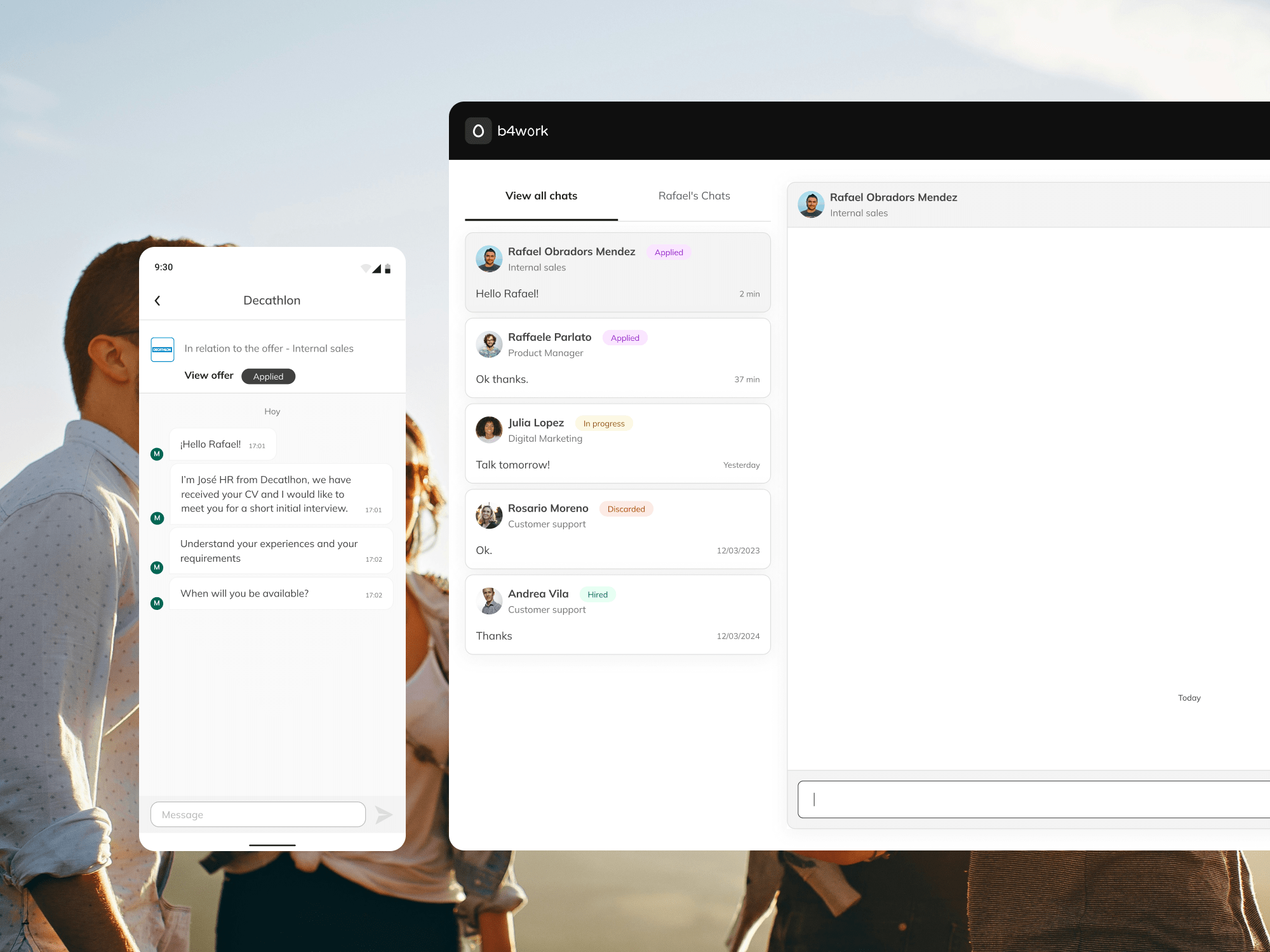
In the world of hiring, we’ve found a big challenge: the not-so-easy talking between recruiters and job seekers on regular job websites. Talking on the phone or through emails often causes delays and makes the hiring process slower.
Recruiters also need to ask candidates quick questions, like if they are available right away or when they can have an interview. These questions need fast and direct answers.
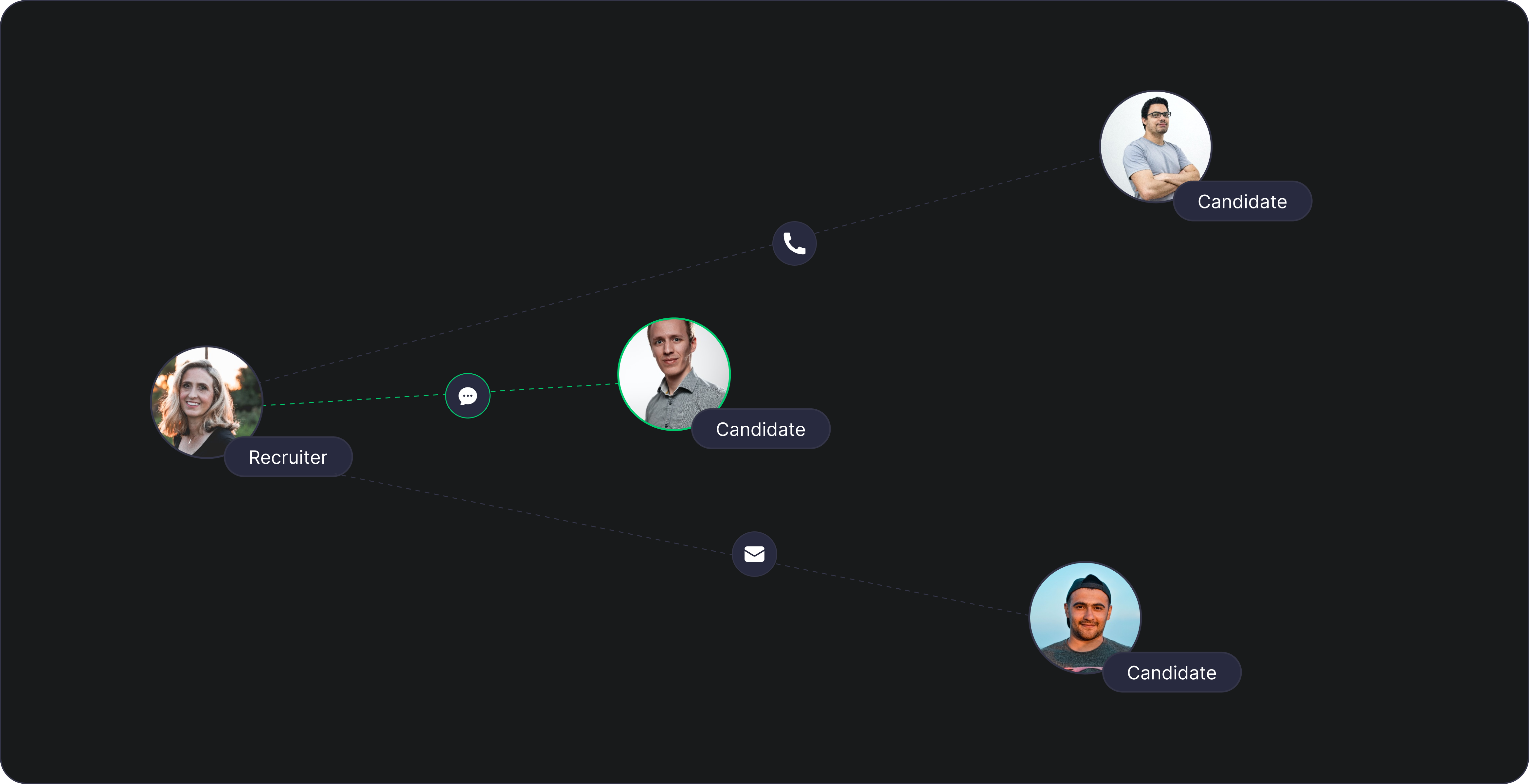
To solve these problems, B4work wants to change how people talk during the hiring process. It offers a platform where recruiters and job seekers can talk in real-time. This makes things quicker, helps them communicate better, and goes beyond the limits of the usual ways people talk during hiring.
My Role
In this project, I took on the primary role of Principal Product Designer, overseeing the entire design process from discovery to designing the solution. I collaborated with two other Product Designers, maintaining close communication with various stakeholders throughout. My responsibility was to ensure an outstanding user experience, guiding each design phase to deliver a product that meets user needs and client expectations.
Empathize – User research
How to facilitate communication between recruiters and candidates to speed up feedback?
User research analysis – Key Findings
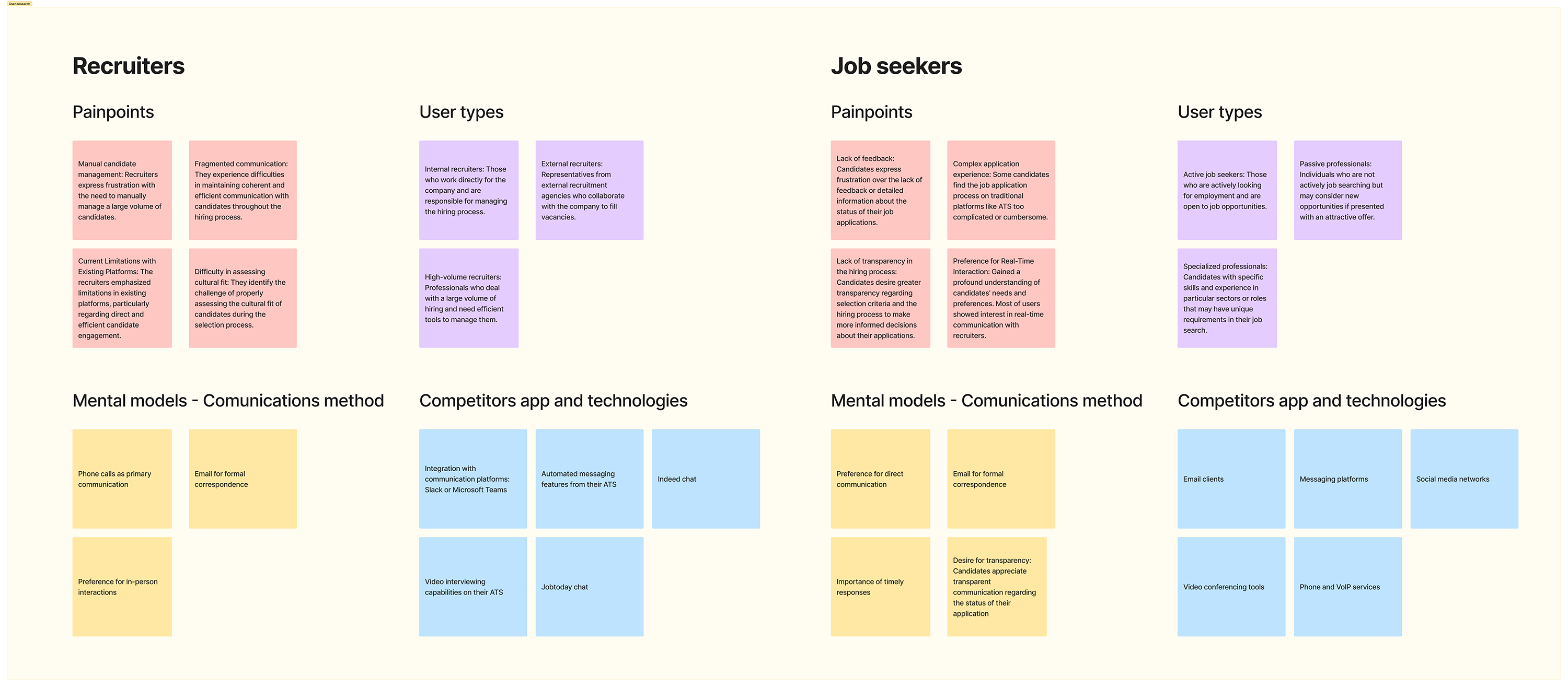
Survey Validation: 80% of recruiters agreed on the importance of direct communication with candidates, confirming the insights from the interviews.
Survey Validation: 75% of recruiters confirmed experiencing delays in the hiring process due to limited communication, aligning with the issues identified in the interviews.
Survey Validation: 85% of candidates expressed a preference for a platform that allows direct and real-time communication with recruiters, validating the identified need during the interviews.
Preference for Direct Communication: Candidates value the ability to communicate directly with recruiters.
Lack of Timely Feedback: Candidates express frustration over the lack of timely feedback or updates on the status of their applications.
Transparency in the Hiring Process: Candidates appreciate transparency regarding the steps of the hiring process and the evaluation criteria used by recruiters.
Preference for Two-Way Communication: Candidates want the opportunity to ask questions and share additional information during the selection process.
Value of Personalized Responses: Candidates value personalized and specific responses to their inquiries or requests.
Competitive Analysis
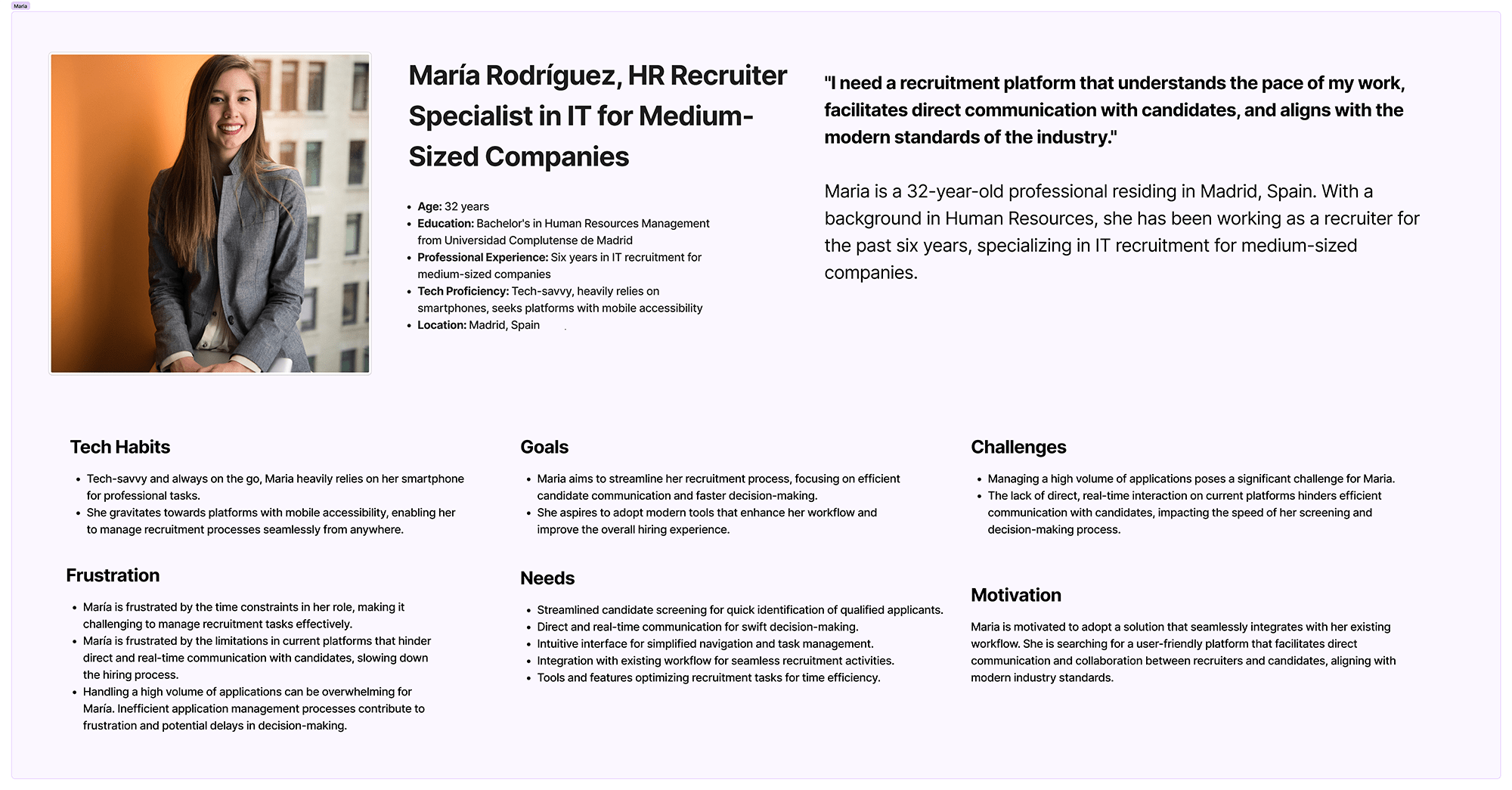
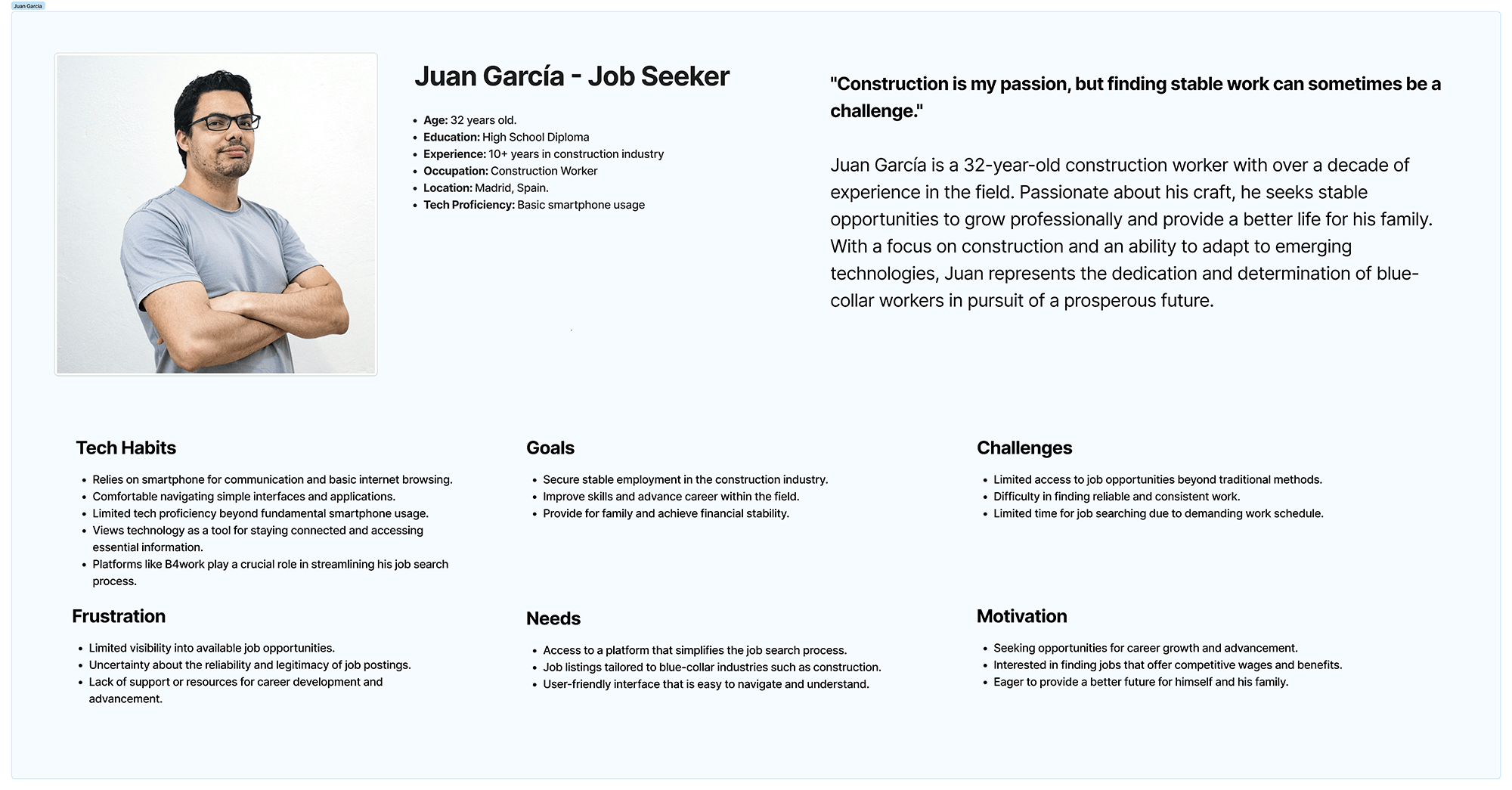
User persona
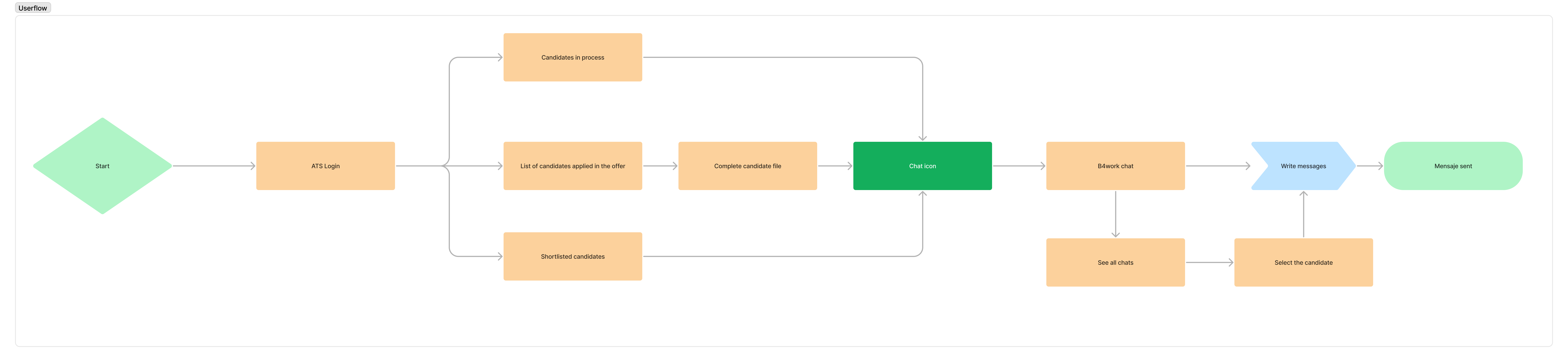
User flow – Recruiter
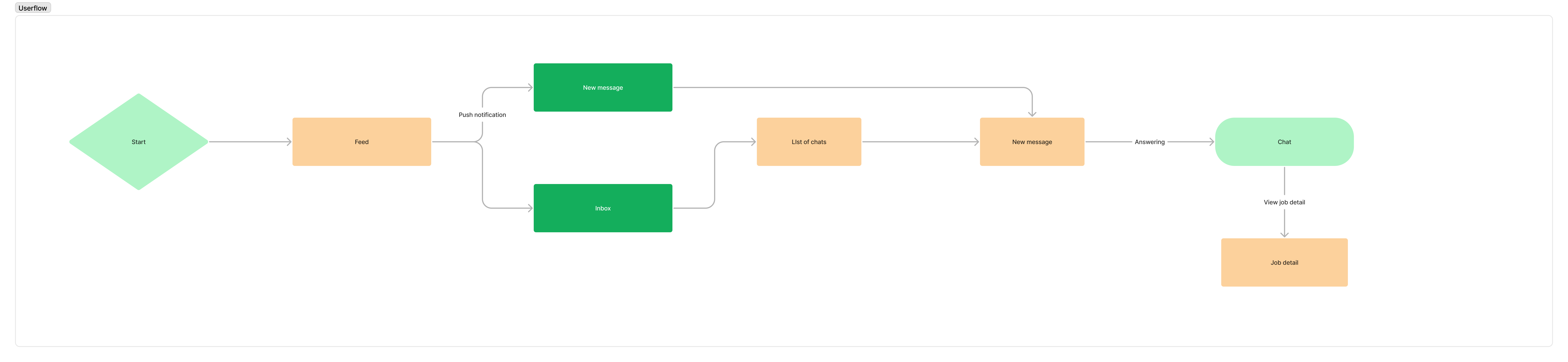
User flow – Job seeker
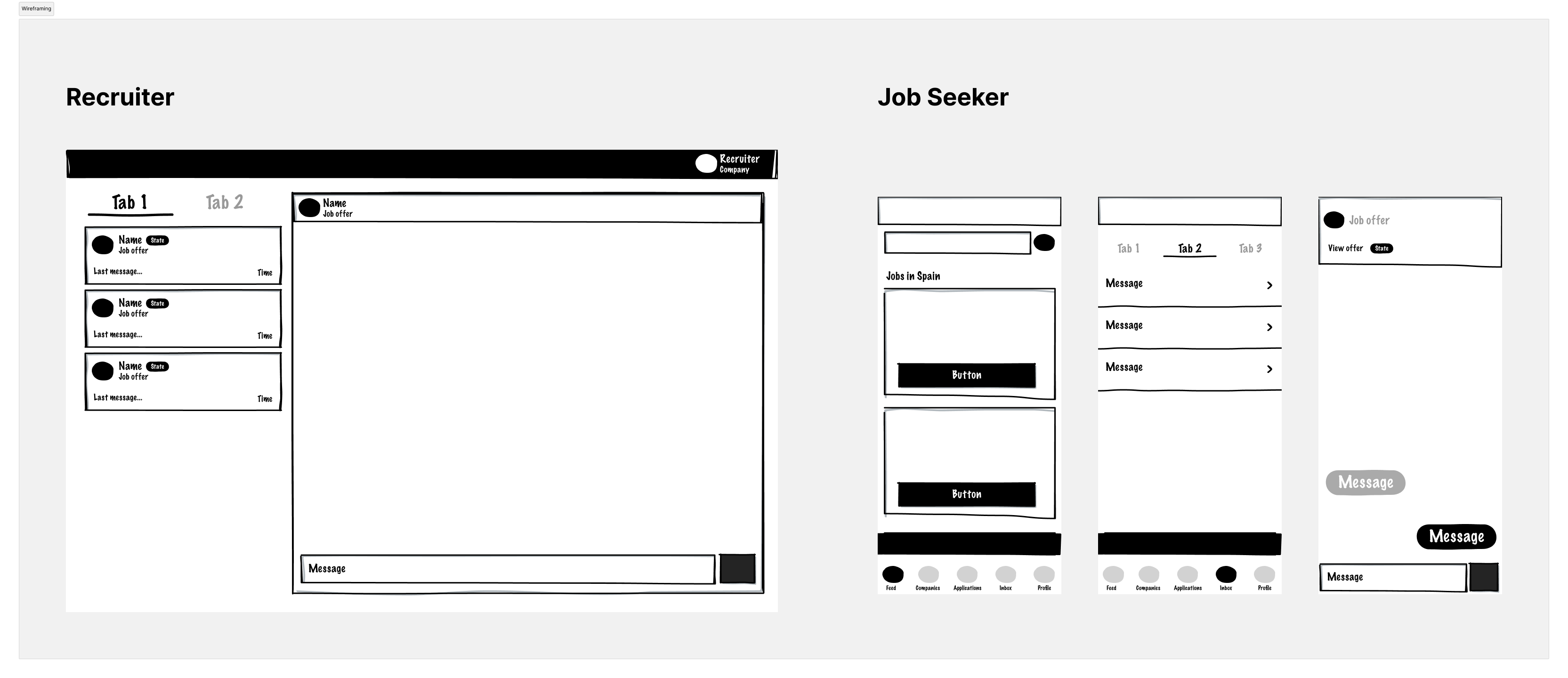
Wireframing
Design principles
Adapt to User Behavior: Design features that align with the natural habits and expectations of users, enhancing usability and satisfaction.
Efficiency: Streamline processes and interactions to minimize user effort and maximize time savings, promoting a seamless experience.
Transparency and Reliability: Prioritize clear communication and consistent performance to instill confidence and trust in users, fostering long-term engagement and loyalty.
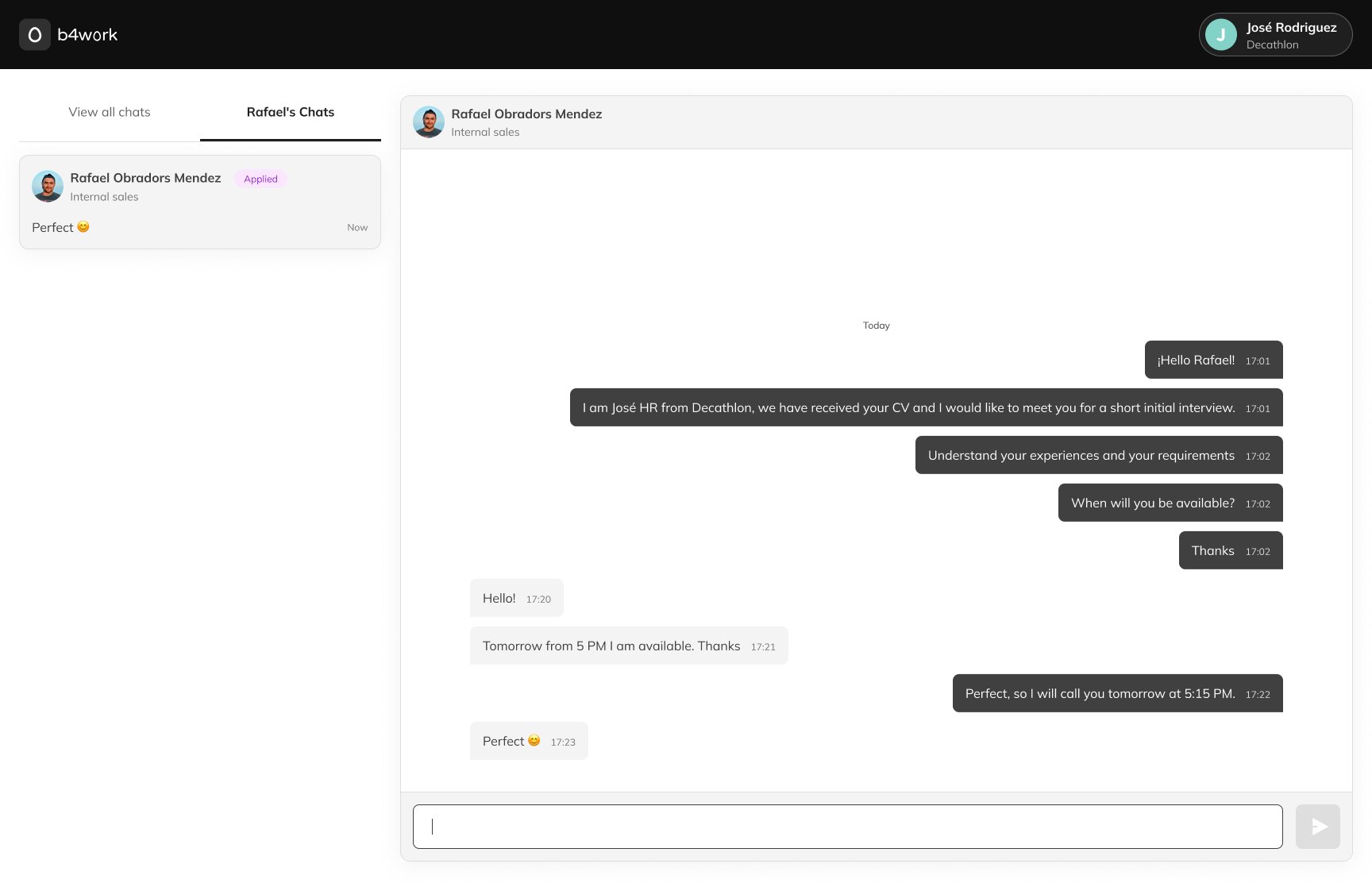
High fidelity – Recruiter
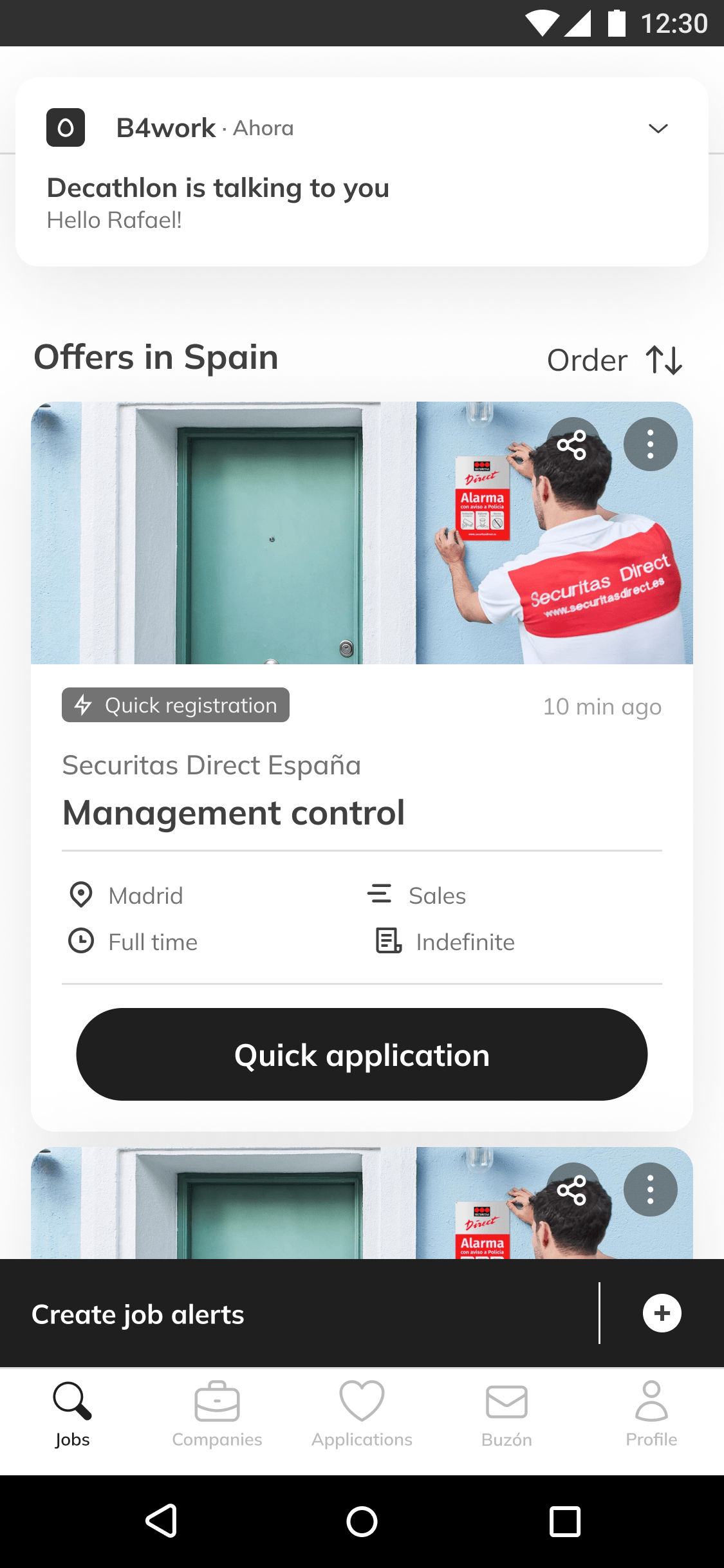
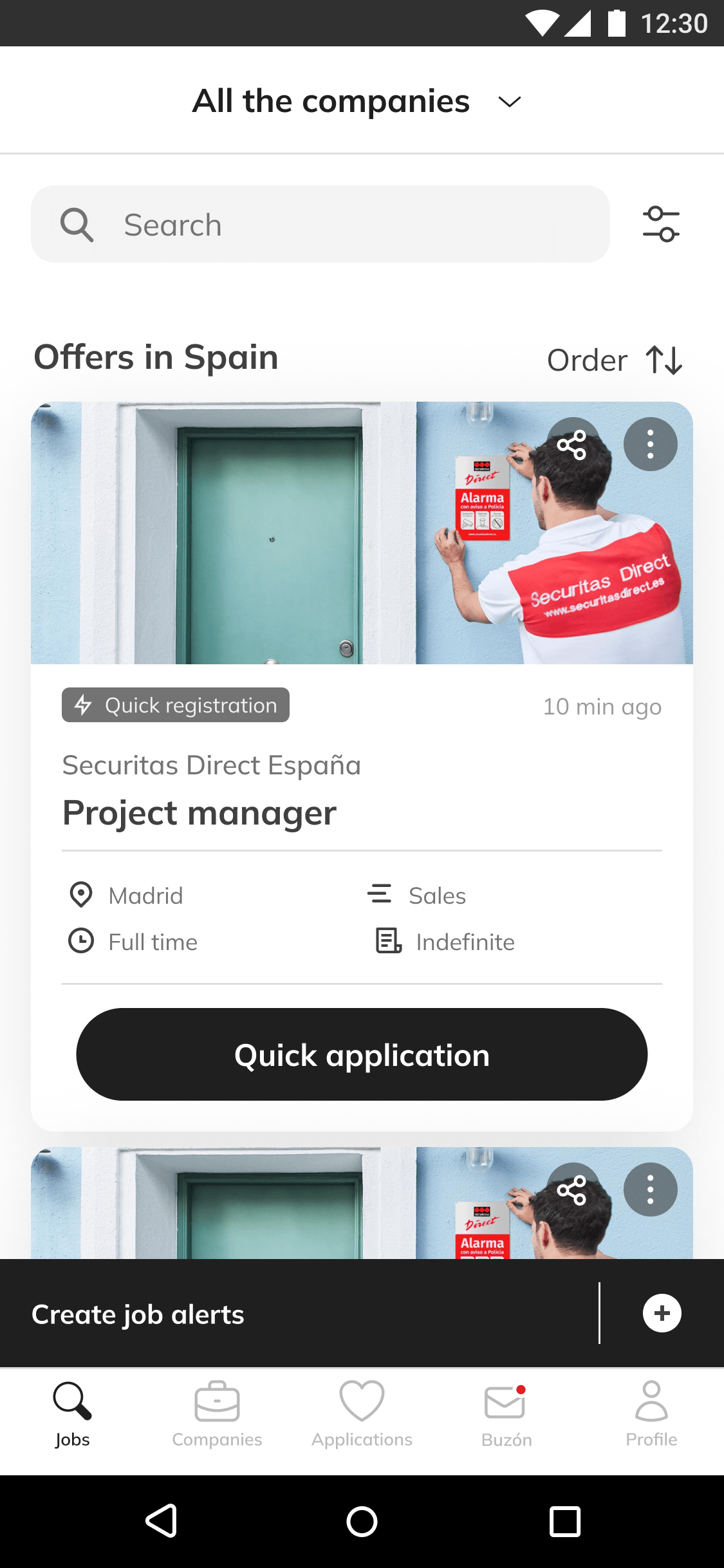
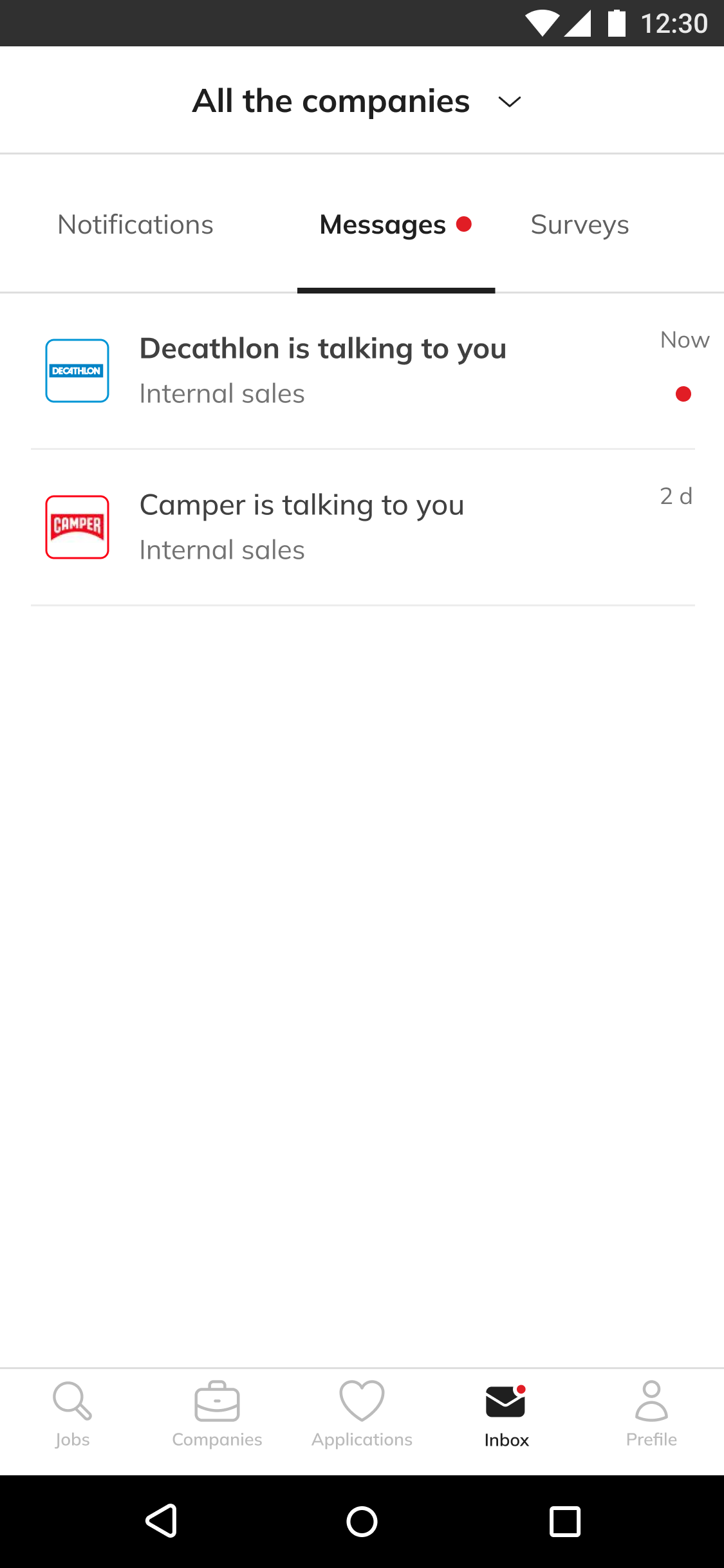
High fidelity – Job seeker
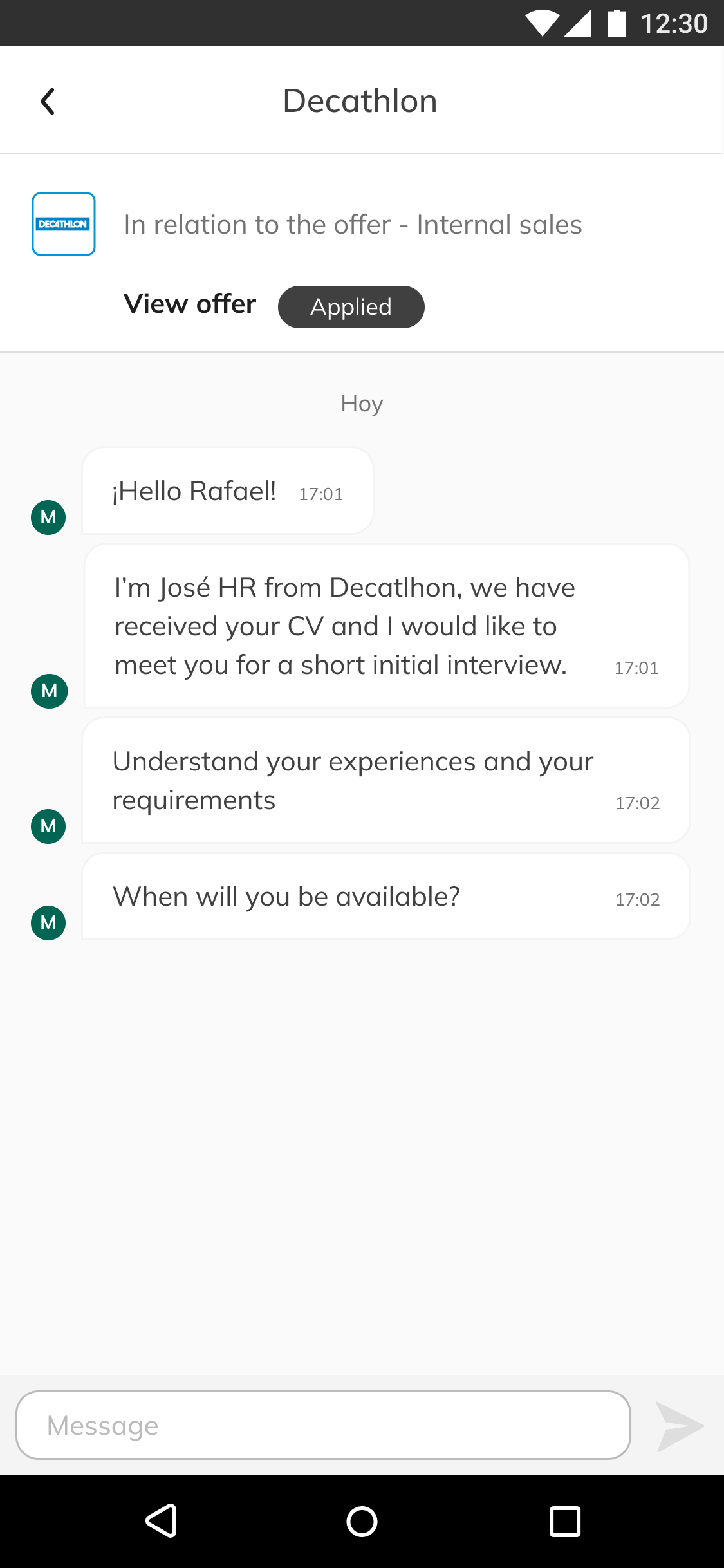
Protoyping – Recruiter
Protoyping – Jobseeker
User testing – Recruiter
User Testing Unveiled: Insights from 5 Recruiters
%
Success Rate
Overall, tasks assigned during user testing were successfully completed by the participating recruiters.
%
Error Rate
With a low 9% error rate, the prototype demonstrates a solid level of precision even in its initial version, leaving room for further improvements.
Average post-task satisfaction
A 71% average post-task satisfaction indicates users’ overall contentment, showcasing the potential for additional enhancements in upcoming iterations.
User testing – Job Seeker
User Testing: Insights from 5 Candidates
%
Success Rate
Success rate in completing assigned tasks during user testing.
%
Error Rate
This indicates that approximately 10% of the candidates encountered difficulties or errors while using the chat feature.
Average post-task satisfaction
Overall user satisfaction was high, with users reporting a positive and seamless experience with the chat feature.
MVP Launch: Metrics and Data Visualization
MVP Launch: What didn’t go so well
Missing Features: Feedback indicates that users miss certain key features they anticipated.
User Habituation: Users accustomed to platforms like WhatsApp or LinkedIn for chat may exhibit resistance to change.
We’re now in Phase 3 of the project, where we’ll keep refining based on feedback. Our focus remains on delivering the best user experience possible, and we’re committed to making continuous improvements as we move forward.
My Learnings
My Learning Journey in Design Thinking: Crafting a Chat Solution